Planning guide
Choosing your wedding color palette
A good palette makes everything look intentional, from the invitations to the napkins to the bridesmaids' dresses.
The short answer
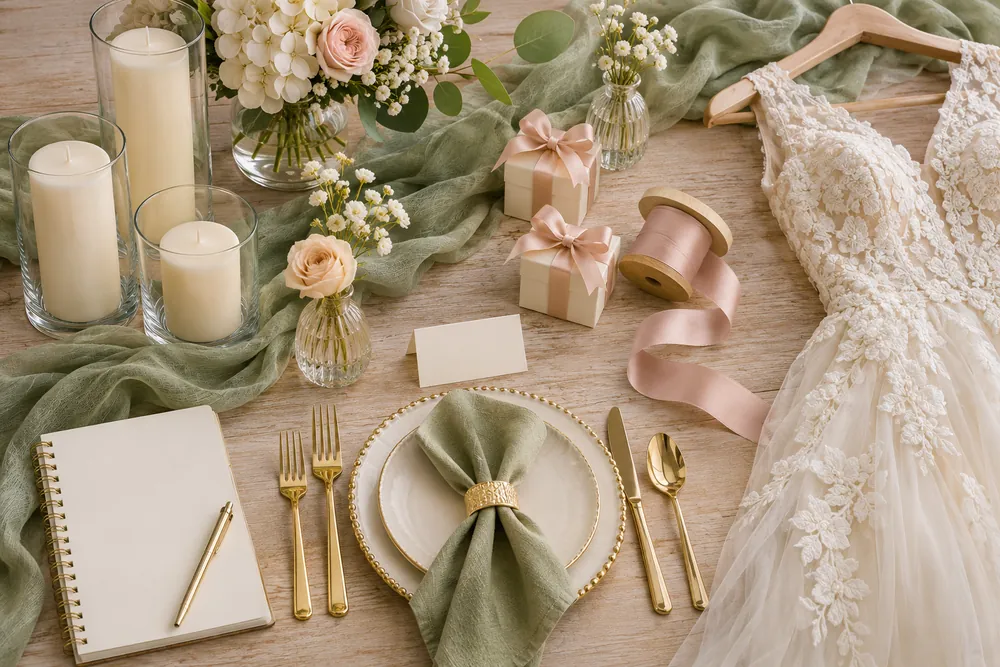
Start with your venue and season, then choose one main color, one accent and one neutral. Sage, blush and ivory with gold accents is a classic example. Carry the palette through flowers, linens, stationery and attire.
Start with what you can't change
Look at your venue's walls, floors and views, and the season's natural colors. A palette that works with them always looks better than one that fights them.
The three-color formula
- Main color: the one people will remember (for example, sage green).
- Accent: a softer or brighter partner (blush pink).
- Neutral: the background that ties it together (ivory or cream).
- Metal: gold, silver or copper for flatware, frames and candle holders.
Palettes couples love
- Sage, blush, ivory and gold: soft and romantic
- Navy, burgundy and blush: rich fall and winter
- Terracotta, cream and olive: warm and earthy
- Dusty blue, white and silver: calm and classic
- Black, white and gold: modern and formal
Test it before you commit
Gather fabric swatches, ribbon and paper samples, like the flat lay above, and look at them in daylight and candlelight. Colors change a lot in the evening.
Updated November 23, 2026.